What the trials showed
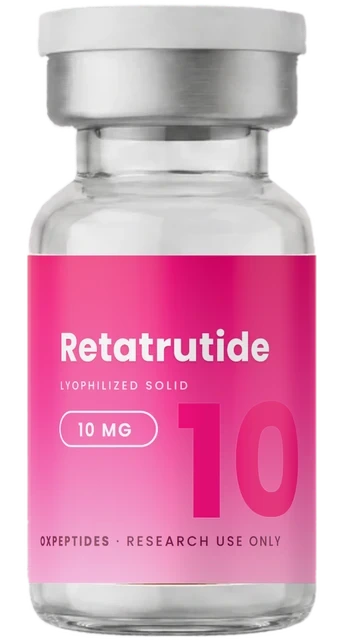
There is no third GLP hormone. When people say GLP-3 they mean retatrutide, one drug that works on three switches in the body.
| Side effect | 4 mg a week | 12 mg a week | Placebo |
|---|---|---|---|
| Nausea | 13.7 % | 28.0 % | 8.0 % |
| Diarrhea | 27.4 % | 33.6 % | 13.2 % |
| Constipation | 14.0 % | 16.8 % | 9.4 % |
| Vomiting | 5.5 % | 15.7 % | not reported |
| Decreased appetite | 5.8 % | 17.1 % | 4.5 % |
Table 1. Adverse events by weekly dose in people with type 2 diabetes, TRIUMPH-2, 80 weeks, 1,152 participants. Source: Eli Lilly announcement of 23 July 2026 (not yet peer-reviewed).
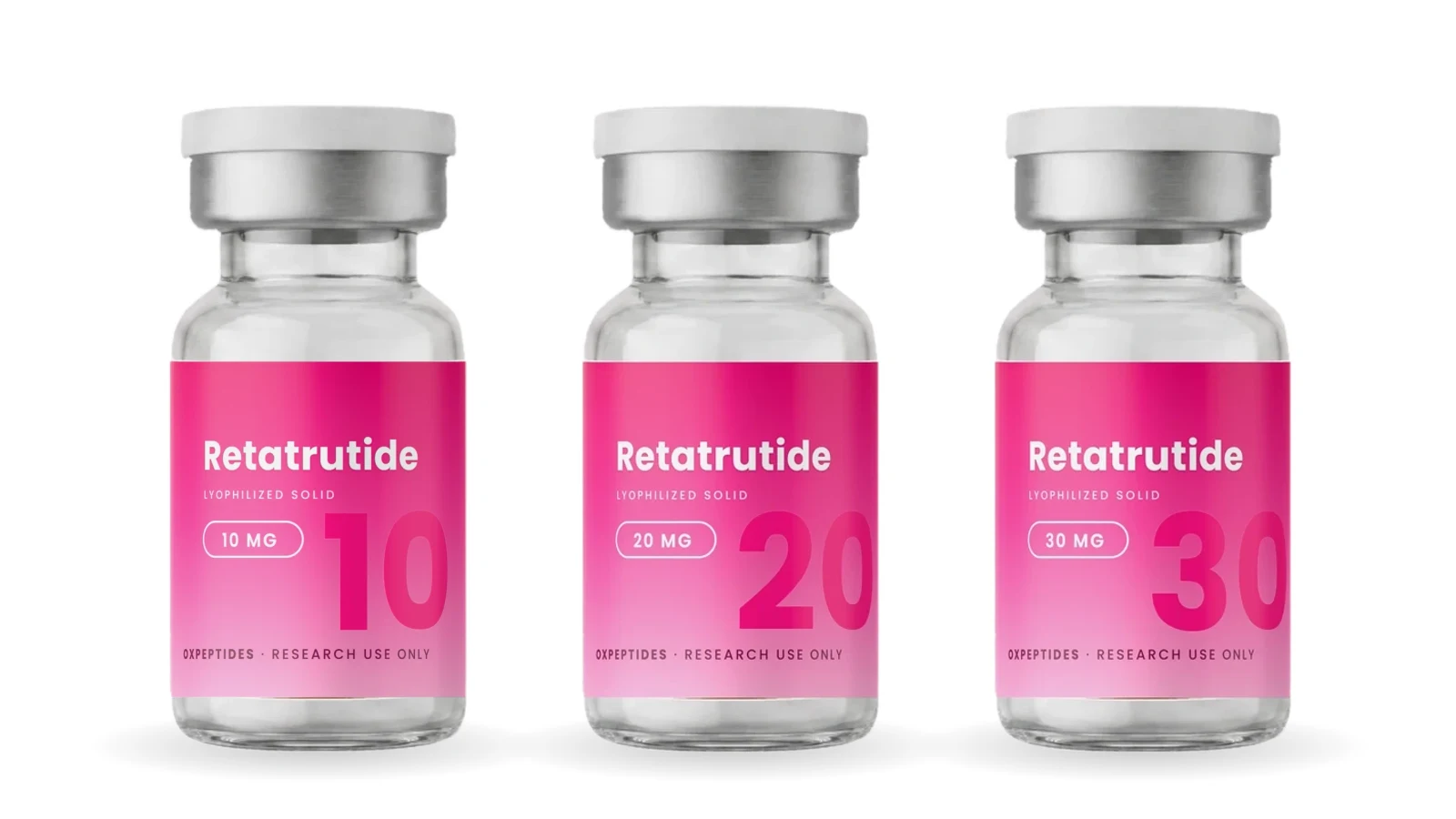
"GLP-3" is not a hormone and not a drug class. It is the name forums and some vendors give to retatrutide, Eli Lilly's investigational triple agonist, by analogy with the GLP-1 drugs that came before it. Anyone searching for GLP-3 side effects is therefore asking about retatrutide, and the answer lives in two peer-reviewed phase 2 papers and four phase 3 company announcements. This page reads them for the adverse events, keeps the doses attached to every figure, and separates what is measured from what is assumed.
Why "GLP-3" has different side effects from GLP-1 drugs
Semaglutide activates one receptor, GLP-1. Tirzepatide activates two, GIP and GLP-1.
Retatrutide activates three, adding the glucagon receptor. The first two receptors explain the familiar gastrointestinal profile: slower gastric emptying, nausea, vomiting, constipation and diarrhea.
The third, glucagon, is what makes the "GLP-3" nickname misleading, because glucagon receptor agonism raises energy expenditure and mobilizes liver fat but also raises heart rate and, on its own, raises blood glucose. The GLP-3 peptide article explains the naming; this one stays with the adverse events.
The consequence is that the side-effect profile of retatrutide is not a copy of semaglutide's or tirzepatide's. The gastrointestinal events look similar in kind and higher in rate. On top of them sit two signals the class did not have at this frequency: a heart rate increase and dysesthesia.
Gastrointestinal side effects by dose: TRIUMPH-1 and TRIUMPH-2
The two largest sources are the phase 3 announcements of May 21, 2026 (TRIUMPH-1, 2,339 adults with obesity or overweight and without diabetes) and July 23, 2026 (TRIUMPH-2, 1,152 adults with type 2 diabetes). Both trials ran 80 weeks and tested 4, 9 and 12 mg weekly maintenance doses against placebo.
| Adverse event | TRIUMPH-1: 4 mg / 9 mg / 12 mg / placebo | TRIUMPH-2: 4 mg / 9 mg / 12 mg / placebo |
|---|---|---|
| Nausea | 28.6% / 38.4% / 42.4% / 14.8% | 13.7% / 20.8% / 28.0% / 8.0% |
| Diarrhea | 25.2% / 34.1% / 32.0% / 13.5% | 27.4% / 33.5% / 33.6% / 13.2% |
| Constipation | 23.8% / 25.9% / 26.1% / 10.9% | 14.0% / 16.2% / 16.8% / 9.4% |
| Vomiting | 10.6% / 22.8% / 25.3% / 4.8% | 5.5% / 10.2% / 15.7% / not reported |
| Decreased appetite | not listed | 5.8% / 12.3% / 17.1% / 4.5% |
Three things stand out. Every event rises with dose.
Every event is more frequent than on placebo, by a factor of two to five at 12 mg. 5 mg to 50% in the 8 mg fast-escalation arm, versus 13% on placebo.
Diarrhea is the exception to the diabetes pattern. In TRIUMPH-2 it was as frequent as in TRIUMPH-1, at about a third of participants on 9 and 12 mg, and it is the most common single event in the diabetes trial.
Nausea was reported by 13.7%, 20.8% and 28.0% of participants on 4, 9 and 12 mg versus 8.0% on placebo.
Eli Lilly, TRIUMPH-2 topline announcement, July 23, 2026
Decreased appetite, recorded as an adverse event
Forum posts describe loss of appetite and "food noise" going quiet as the purpose of the drug. The trials record it as an adverse event when it was reported as a complaint.
5% on placebo. The figure is worth keeping in view because it shows that the mechanism of weight loss and the side effects are not separable: the same receptor activity that reduces intake produces, in a share of participants, an appetite loss they experienced as a problem.
How the phase 2 papers describe the events
The peer-reviewed sources say less in numbers but more about severity. The phase 2 obesity paper, 338 adults over 48 weeks, summarizes the safety result in one sentence: the most common adverse events in the retatrutide groups were gastrointestinal, these events were dose-related, were mostly mild to moderate in severity, and were partially mitigated with a lower starting dose (2 mg versus 4 mg). The phase 2 diabetes paper reports no severe hypoglycemia and no deaths, in a population that was not taking insulin or sulfonylureas.
The starting-dose finding matters for anyone reading forum "protocols". In the diabetes trial, the 8 mg arm that started at 4 mg had more gastrointestinal events than the 8 mg arm that started at 2 mg, even though both ended at the same dose.
The speed of escalation, not only the destination, sets the burden. The dosage article lists every escalation schedule the trials used.
The two signals that are not typical of the GLP-1 class
Heart rate. The phase 2 obesity paper reports dose-dependent increases in heart rate that peaked at 24 weeks and declined thereafter.
The tirzepatide label reports a mean increase of 1 to 3 beats per minute in its pooled obesity trials, but the glucagon component gives retatrutide a mechanism of its own, and the retatrutide abstract does not give the magnitude. The heart rate and arrhythmia article sets out what is and is not known, and why the answer will come from the TRIUMPH-Outcomes trial around 2029.
Dysesthesia. An abnormal skin sensation, most often described as tingling, burning or heightened sensitivity to touch.
7% on placebo. 4% of patients.
Lilly describes the events as generally mild and rarely leading to discontinuation; no published source explains the mechanism.
How many people stopped
Discontinuation because of adverse events is the number that turns a list of complaints into a measure of tolerability. 9% on placebo.
9% on placebo. 8%.
0%. The full side effects article puts these next to the dropout figures for semaglutide and tirzepatide.
What "GLP-3 side effects" searches usually get wrong
- Treating the name as a class. There is one compound in late-stage trials with this receptor profile, and its side-effect data come from its own trials, not from GLP-1 experience.
- Quoting a rate without its dose. A nausea rate of 13.7% and a nausea rate of 42.4% are both retatrutide figures; one is 4 mg in type 2 diabetes and the other is 12 mg without diabetes.
- Reading an absence as a negative finding. The announcements do not mention pancreatitis, gallbladder disease or thyroid findings. Topline releases list the most frequent events only; the full safety tables have not been published.
- Assuming the trial figures describe research-use vials. Every number above comes from a Lilly-manufactured product, given by trained staff, to screened participants, with escalation over months and monitoring throughout.
Retatrutide is an investigational compound, not approved by the FDA or the EMA. What a label would eventually say about its side effects, contraindications and warnings does not yet exist.